


By Chuma Austin
Igbo ethnic nationality like any other group in Nigeria is facing turbulent socio-economic and political challenges ranging from insecurity, hunger, poverty, perceived marginalization, among others.
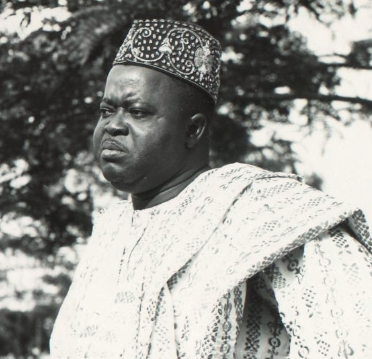
A retrospective view indicates that during the first six years of Independence of Nigeria, there were physical structures, human capacity building, economic progress and prosperity recorded under the Sir Michael Okpara (of the blessed memory) as the Premier of the defunct Eastern Region.
Okpara was credited with laying a solid foundation and creating a template of development agenda for the region which then covered part of the existing South-South states, excluding Edo and Delta states.
For instance, Okpara built many farm settlements as well as commerce and industry in the present Southeast and South-South geo-political zones. The Hotel Presidential in Enugu and Port Harcourt; oil palm and cashew plantations, Niger Gas, Nigercem, Niger Floor mill in Enugu, among others, were to Okpara’s credit.
Little wonder, many people up to this day, regard Okpara’s regime as “golden era”. The regime transformed the lives of the Easterners positively from 1959 to 1966. The question is: why have successive regimes, beginning from the military regimes to the civilian dispensation not been able to raise the bar of good governance after Okpara?
Apart from Chief Jim Nwobodo and Chief Sam Mbakwe, then governors of old Anambra and Imo states, respectively, no other Igbo leader has met the agricultural revolution set by Okpara. Regrettably, a visit to the region, shows that some of those lofty idea, ideals and monuments left behind by those leaders, especially Okpara, have almost become relics, due to lack of consolidation and vision.
The farm settlement schemes designed to guarantee food security, boost agro-allied industries and promote importation of produce have almost become moribund. The major industries bequeathed by the Okpara administration have become antiquated, just as the programme of rural development and integration had suffered an abysmal neglect, leading to massive rural-urban migration and pressure on infrastructure in the major cities and towns across the Southeast zone.
A cross section of Enugu residents told News Echo that successive regimes had not raised the bar set by Okpara because of the “over-centralization of power at the Centre”.
One of them was Mazi Okechukwu Azuka who said: “Every capital project has to be approved by the centre. This means that governors are practically incapacitated in any huge developmental project.
One other reason the respondent adduced is corruption, pointing out that avarice is the product of unchecked power; unchecked power in the sense that centralization paves the leeway for silent looting of the nation’s treasury.
His words: “Today we still talk of glorious era of Michael Okpara. Ironically, Okpara was the Premier of the East and not the Prime Minister of the country. Okpara used proceeds from palm oil to develop the East; Chief Obafemi Awolowo used cocoa to develop the West, while Ahmadu Bello used groundnut to develop the North. Let every region move at their pace as it was in the First Republic. There will be a healthy competition and it will douse tension and restiveness in the country”
“I am glad that our Southeast governors are now supporting restructuring and establishment of State Police. It appears they have woken up from slumber to face the reality”.
Be that as it may, a number of the Igbo believe that they gained in the First Republic more than other periods in the history of Nigeria as an independent nation because some of their kinsmen were either elected or appointed into top positions in the parliamentary system of government that existed then.
For instance, Dr Jaja Wachukwu was made the Minister of External Affairs; Dr Aja Nwachukwu (Minister of Education) Dr Nwafor Orinzu (Senate President), while Dr Nnamdi Azikiwe was the president of the country.
However, some individuals still believe that the Igbo got those key positions based on merit and not through any form of concession by anybody. To the Executive Director of Civil Liberties Organization (CLO), Comrade Ibuchukwu Ezike, “those top appointments were given to Igbo because they merited them by virtue of their western education.
“Recall that Jaja Wachukwu was the first indigenous Speaker of the House of Representatives that received the mantle of leadership and handed it over to the Prime Minister, Sir Tafawa Balewa. The Igbo never gained from the First Republic collectively because there had never been Federal Government presence in terms of infrastructure,” he said.
Indeed, after the 1967 to 1970 civil war, the Igbo have produced the second in command under two different administrations. The first time was in 1979, when the late Dr Alex Ekwueme became the vice president to President Shehu Shagari. The second period was when Commodore Ebitu Ukiwe was the second-in- command to former military president, General Ibrahim Babangida.
During Obasanjo’s second coming in 1999 as an elected president of the country, the Igbo fared better individually but collectively not, as only Igbo technocrats of Igbo extraction made into his kitchen cabinet. Igbo were in coma under the Umaru Yar’Adua presidency, while under Goodluck Jonathan, the Igbo fared better comparatively.
Jonathan established Federal University in Ebonyi State, while the Akanu-Ibiam airport, Enugu was given an international status. But both the Owerri cargo airport and the Akwette weaving plant in Abia State only existed on paper.
Though the President Muhammadu Buhari administration has revived the Second Niger Bridge project, the general feeling among the Igbo is that the government has not been too passionate about the predicament of Ndigbo in the scheme of things in the country generally
Pro-Buhari elements, however, are quick to cite the completion of the Akanu-Ibiam International airport as symbolic of the favourable disposition of the government to the sensitivity of the people. They also list the Second Niger Bridge project that has reached advanced stage of completion.
At the moment, the pan-Igbo organisation, Ohanaeze Ndigbo, the internal rumpus notwithstanding, has the onerous task of mobilizing the people for self-discovery and renaissance.
The on-going bloody duel between members of the Indigenous People of Biafra (IPOB) and the Nigeria security operatives, a reminiscence of Nigeria/Biafra civil war, needs to be resolved through dialogue to stem further loss of lives and property in the region.
Happily, the South East governors led by David Umahi of Ebonyi State, had in their last meeting in Enugu last Sunday, agreed to dialogue with any aggrieved person or group of persons with a view to bringing a lasting peace to Igbo land.
It is only through maximum protection of lives and property, transparency and accountability as well as genuine dialogue that the people of the Southeast zone will listen to an explaination that the regional security outfit christened ‘Ebubeagu” was not created to protect and consolidate the Jihadist Fulani Herdsmen incursions and settlements in Southeast zone.
Ndigbo need a level playing ground at all levels in Nigeria where equity, justice and fairness reign supreme.