


The World Health Organisation (WHO) has said though Monkeypox outbreak is spreading globally it does not currently constitute a global health emergency.
It, however, agreed that it is “clearly an evolving threat.”
This is the outcome of an emergency committee meeting conveyed by the global health body as contained in a statement published on the WHO website on Saturday.
It added that the response to the outbreak requires collaborative international efforts.
In his comment on the report, the WHO Director-General, Tedros Ghebreyesus, said: “The emergency committee shared serious concerns about the scale and speed of the current outbreak, noted many unknown gaps in current data and prepared a consensus report that reflects differing views amongst the committee.
“They advised me that at this moment the event does not constitute a Public Health Emergency of International Concern (PHEIC), which is the highest level of alert WHO can issue but recognised that the convening of the committee itself reflects the increasing concern about the international spread of monkeypox.”
Mr Ghebreyesus said the outbreak was “clearly an evolving health threat” that needed immediate action to stop its further spread, using surveillance, contact-tracing, isolation and care of patients, and ensuring vaccines and treatments are available.
“What makes the current outbreak especially concerning is the rapid, continuing spread into new countries and regions and the risk of further, sustained transmission into vulnerable populations including people that are immunocompromised, pregnant women and children,” he added.
Committee conclusion, advice
According to the report of the meeting with the International Health Regulations (2005) (IHR) Emergency Committee, the current multi-country outbreak is unusual due to its circulation in non-endemic countries, and the fact that the majority of cases were confirmed in gay men who were not previously immunised against smallpox.
Some members of the committee suggested that “given the low level of population immunity against pox virus infection, there is a risk of further, sustained transmission into the wider population that should not be overlooked.”
The committee also stressed that Monkeypox virus activity has been neglected and not well controlled for years in countries within the WHO African region.
“While a few Members expressed differing views, the committee resolved by consensus to advise the WHO Director-General that at this stage the outbreak should be determined to not constitute a PHEIC.
“The Committee advised that the event should be closely monitored and reviewed after a few weeks, once more information about the current unknowns becomes available, to determine if significant changes have occurred that may warrant a reconsideration of their advice,” the report reads in parts.
In his response, Mr Ghebreyesus urged all member states to take the recommendations of the committee for stepped-up surveillance, improved diagnostics, community engagement, vaccination and public health measures.
WHO Monkeypox situation report
At the committee meeting, WHO presented the global epidemiological situation on Monkeypox, highlighting that since the beginning of May 2022, 3,040 cases have been reported from 47 countries.
It noted that while the transmission is occurring in many countries that have not previously reported cases of Monkeypox, the highest numbers of cases are currently reported from countries in the WHO European Region.
The report further explained that “the initial cases of Monkeypox, detected in several countries in different WHO Regions, had no epidemiological links to areas that have historically reported Monkeypox, suggesting that undetected transmission might have been ongoing for some time in those countries.
“The majority of confirmed cases of monkeypox are male and most of these cases occur among gay, bisexual and other men who have sex with men in urban areas and are clustered social and sexual networks.”
It added that representatives of Canada, the Democratic Republic of the Congo, Nigeria, Portugal, Spain, and the United Kingdom updated the Committee on the epidemiological situation in their countries and the current response efforts.
About Monkeypox
According to the Centre for Disease Control and Prevention (CDC), Monkeypox was first discovered in 1958 when two outbreaks of a pox-like disease occurred in colonies of monkeys kept for research, hence the name ‘Monkeypox.’
The first human case of Monkeypox was recorded in 1970 in the Democratic Republic of Congo (DRC) during a period of intensified effort to eliminate smallpox.
Since then, Monkeypox has been reported in people in several other central and western African countries: Cameroon, Central African Republic, Côte d’Ivoire, the Democratic Republic of the Congo, Gabon, Liberia, Nigeria, Republic of the Congo, and Sierra Leone.
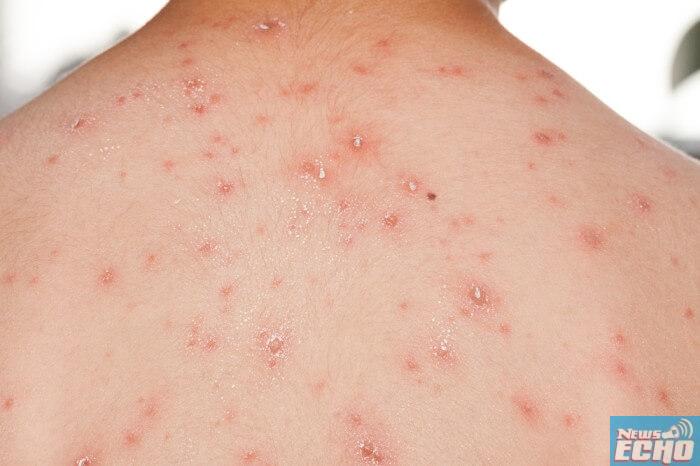
The initial symptoms include fever, headache, muscle aches, backache, swollen lymph nodes, chills, and exhaustion. A rash can develop, often beginning on the face, and then spreading to other parts of the body. The rash changes and goes through different stages before finally forming a scab, which later falls off.
As monkeypox continues to spread globally, a new report has stated that while the viral infection can be severe in some individuals, “death is a possibility, as is blindness”.
In the report, titled ‘Investigating monkeypox’ and published by The Lancet medical journal on June 18, scientists also raised concerns over the sudden outbreak of monkeypox and its continued spread, particularly in non-endemic countries.
According to a professor of infectious diseases and international health at University College, London, Ali Zumla, “Monkeypox cases have emerged sporadically in non-monkeypox endemic countries before, but never on this scale, across continents, and with ongoing human-to-human local transmission.
“For decades, scientists in Africa have witnessed a gradual rise in monkeypox cases. As humans continued to move into animal habitats and cross-protection offered from smallpox immunisation campaigns began to wane, the optimal conditions for an outbreak were in place”.
The latest monkeypox update by the World Health Organisation (WHO) shows that from January to June 15, 2022, 42 countries across five regions have reported a cumulative total of 2,103 confirmed cases with over 80 per cent recorded in non-endemic countries.
According to the data, the WHO European Region topped the infection with 1773 cases reported from 26 states, followed by the Region of the Americas with 245 from six states.
The African Region came third on the log with 64 cases from six countries, of which Nigeria topped the list with 36 cases, followed by the Democratic Republic of the Congo and the Central African Republic with 10 and eight cases respectively, while the three other countries are Ghana, Cameroon, and Congo.
Monkeypox common in rodents
Despite its first discovery in a laboratory monkey in Denmark in 1958, the report established that the virus is more common in rodents than in monkeys, adding that the natural source of the virus and the range of animals that it can infect is unknown.
David Evans, a virologist in the department of medical microbiology and immunology at the University of Alberta, Canada, said the determinant of whether an animal can host the monkeypox virus is its ability to block the infection, not whether the virus can enter the first place.
“It is not immediately obvious which European species could host monkeypox, but it would probably be some kind of shrew or vole”, said Mr Evans. “Certainly, in Africa, the virus is found in a variety of rodents.”
According to the Lancet, the earliest documented human case of monkeypox was in 1970 in the Democratic Republic of Congo. The first identified occasion on which the disease broke out in Africa occurred in 2003 after a shipment of monkeypox-infected rodents from Ghana arrived in Texas, USA, where they were kept in close proximity to prairie dogs, which in turn contracted the virus.
It added that several dozen Americans were subsequently diagnosed with monkeypox, starting with a 3-year-old girl who was bitten by her pet prairie dog.
Clades of Monkeypox
The report also corroborated the WHO’s findings that all cases identified in newly affected countries were confirmed to have been infected with the West African variant of monkeypox, which is associated with an estimated case fatality rate of one per cent, as compared with up to 10 per cent for the Congo-basin variant.
It, however, noted that Cameroon is the only country in which both variants had been found, and “no nation outside of Africa has ever reported death from monkeypox.”
The WHO had explained that the West African clade of monkeypox virus infection sometimes leads to severe illness in some individuals, as the disease is usually self-limiting with documented case fatality ratio to be around one per cent.
The Congo Basin clade, on the other hand, may be as high as 10 per cent, as children are also at higher risk, and Monkeypox during pregnancy may lead to complications, congenital Monkeypox, or stillbirth.
Transmission
The report quoted a statement to the media on May 31, the WHO Regional Director for Europe, Hans Kluge, asserted that the monkeypox outbreak in Europe is currently being transmitted through social networks connected largely through sexual activity, primarily involving men who have sex with men.
“Whether or not monkeypox is a sexually transmitted disease has yet to be shown; it is definitely passed on through close contact,” it noted.
Similarly, the WHO latest publication also maintained that the modes of transmission during sexual contact remain unknown; while it is known that close physical and intimate skin-to-skin or face-to-face contact can lead to transmission. it is not clear what role sexual bodily fluids, such as semen and vaginal fluids, play in the transmission of monkeypox.
However, the scientist in the Lancet report believes that the spike in cases in Europe and North America could be linked to a mutation that has left the monkeypox virus more transmissible, as against the fact that monkeypox is a DNA virus, which is more stable than RNA viruses such as SARS-CoV-2 and influenza.
“I think the most probable explanation is that monkeypox simply found its way into the right population at the right time, which has allowed it to spread”, said Anne Rimoin, Professor of Epidemiology at the University of California, USA.
“We are at a pivotal moment in what happens with poxviruses globally”, she noted.
Speaking further, she said: “We have given monkeypox an opportunity to spread and spread quickly because we have not been monitoring it in Africa with anything like the kind of intensity that such efforts warrant.”
She pointed out that monkeypox researchers have consistently struggled to obtain funding.
“This is a virus that, until recently, has been circulating primarily in remote villages in central Africa; it takes a lot of money and organising to do the studies that would allow us to truly understand it”, she said.
While several key questions remain unanswered, Ms Rimon suggested the need to characterise the transmission mechanisms of monkeypox.
She added: “We need to assess the potential for pre-symptomatic transmission, the period of infectivity, and the stability of the virus on surfaces and in the air. We do not even know what the best inactivation protocols are for different settings.”
Vaccination
On vaccination, the WHO had explained that the monkeypox virus is related to the virus that did cause smallpox, which was declared eradicated in 1980 worldwide, suggesting that the smallpox vaccine is an alternative.
Mr Evans attributed the current outbreak of monkeypox infection to the decline in the administration of smallpox vaccines.
“Monkeypox has done what you would expect it to do. It has taken advantage of immunodeficiencies and declining smallpox vaccination status to expand its numbers”, he told the Lancet.
However, in the latest monkeypox update, the WHO said since the eradication of smallpox, any continuing immunity from prior smallpox vaccination would in most cases only be present in persons over the age of 42 to 50 years or older, depending on the country.
It noted that protection for those who were once vaccinated may have waned over time and the original (first generation) smallpox vaccines from the eradication programme are no longer available to the general public.
The WHO added that the vaccines, where available, are being deployed in a few countries to manage close contact and one of the second-and third-generation smallpox vaccines proven to have an improved safety profile has been approved for the prevention of monkeypox.