


By Ori Martins (Owerri), Dan Maduagwu (Umuahia), Uche Ezedigwe (Awka), Nonye Udumiri (Aba)
The revelation is earthshaking. The details are gory. And the manifestation of it as a reality is quite unimaginable. How can a patient undergo tests in three different hospitals and have three different results?
Why is it that a certified medical doctor cannot accurately diagnose a patient who comes to his clinic for cure? Indeed, why this skyrocketing wrong diagnosis by both laboratory technicians and medical doctors which has led to several untimely deaths?
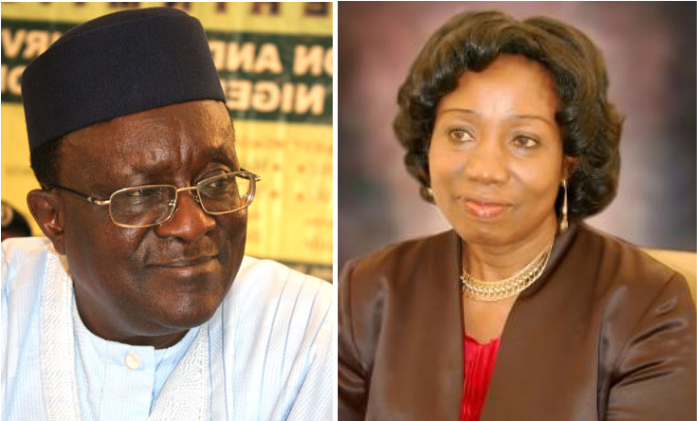
Many Nigerians, including the late Prof Dora Nkem Akunyili, the ex-Director-General of National Food and Food Administration and Control (NAFDAC) received wrong results on suspected ailments that troubled their health but unfortunately, the diagnosis produced wrong results which claimed their lives — rather than saving them. This has been a major problem for a good number of Nigerians, most of whom zoom out of medical laboratories, armed with supposed results reading malaria, typhoid fever or other ‘popular sicknesses’ ,oblivious that the said results are far from what they suffered.
Charles Peters Owums, aged 34, lived with his pregnant wife and two year old boy at 19, Sabo Road, Alagbole in Ogun State. He did his oil and gas trading business at the Apapa area of Lagos. For more than six months in late 2008, Owums was in and out of hospital where he was diagnosed with malaria. In March 2009, Owums could neither walk steadily nor perform his daily functions.
His wife was forced to alert his elder brother who took him to a specialist hospital where it was shockingly discovered that Owums’ two kidneys had packed up. That is, his renal failure had reached end – stage! Two remedies existed – dialysis and or kidney transplant. The former was cheaper and easier for his siblings who also lived in Lagos. However, after four months, Owums’ brothers could no longer afford the two times weekly dialysis which was pegged at N35, 000 per session, totaling N70, 000 weekly and N280, 000 monthly.
In view of the foregoing, Owums’ brothers sent him to the village and after one week, since he could get any dialysis treatment, he gave up the ghost.
Even now, the PDP in Imo State has been thrown into a serious mourning following the death of one its most hard working youth members, Mr. Eze Dominic, from Nguru, Aboh Mbaise. It is alleged that Eze reported sick to a clinic in November last year in Owerri.
He was diagnosed and treated of typhoid. It was disaster as the admirable Eze was never troubled by any typhoid. Between January and February this year, Eze’s condition grew worse. He was then rushed to the Federal Medical Centre, Owerri where it was painfully diagnosed that he was attacked by hepatitis which had destroyed the kidneys. All efforts made by the doctors at FMC to save Eze proved abortive. Eze died early this week!
So, what are the factors responsible for wrong diagnosis?
Dr Ignatius Nnamdi Igwebuike, is a medical doctor at the Federal Medical Center, Umuahia, Abia State and he stated some of the facts behind wrong diagnosis. He said, “The issue of wrong diagnosis is a setback in the process of treatment or management of a health crisis in a patient. There should be an accurate rapport between medical doctors and medical laboratory scientists or attendants in the course of a patient undergoing a test. This is before the services of other arms of medicine like pharmacists etc who are involved.
“A medical doctor or a specialist sends a patient to be diagnosed in the lab and when the result is out, the results are brought back to the doctor and the process continues and so forth. If the medical sequence is not well followed, a wrong diagnosis could occur. But I must warn that the problems are most times caused by the patients in Nigeria who refuse to submit themselves for diagnosis or preferring to self-treat themselves. Another problem is that some patients don’t believe in holistic medical diagnosis but only pin-point the tests they want to be run on them. I partly blame it on poverty and ignorance on part of the patients”.
A lab technician, Eunice Nwokocha who works at TAAC LAB, Umuahia, Abia State, added her voice on the reasons that could possibly lead to wrong diagnosis. According to her, “Detecting a disease in humans is a very sensitive job that requires the dedication of the professionals and that is what we do here. Our patients receive utmost care and we have maintained this track record in decades. But I urge patients to report early for diagnosis and to avoid quacks or wrong treatment of ailments. Some sicknesses have similar symptoms on humans but only a correct medical laboratory conducted by experts could produce the needed results before the commencement of treatment, done in the best global health standard”.
She added; ”For instance, malaria, typhoid fever, hepatitis could exhibit similar symptoms and a patient, if ignorant, could be patronizing a road side drugs shop even when the real thing such a patient is suffering from has not been established.”
Toeing the same line, the chairman of Nigerian Medical Association (NMA) in Abia State, Dr Chimezie Okwuonu during the World Kidney Day celebration in Umuahia, last week sounded a heavy alarm that one in every 10 Abians suffered one form of kidney challenge or the other. According to the NMA boss, who is also a consultant at Federal Medical Center, Umuahia, the high rate of kidney disease was partly by late detection and late treatment, which another form of wrong diagnoses. The Abia NMA boss however, stated that the issue of wrong diagnosis in the country was down from the previous high rate.
This, he attributed to installation of modern machines in specialist hospitals across the country.
He said, “The problems we have in Nigeria today are not much on wrong diagnosis but late diagnosis and treatment. The incidence of wrong diagnosis is there, but minimal. It was high in the past but the availability of good equipment and qualified professional has reduced it, though, treatment cost especially when the cases in advanced stages are in most time high. Low education, superstition and late detection are some of the problems Nigeria patients are also factors. Some people rather than going for early test or screening would prefer to approach unqualified persons for medical advice , and this is another form of wrong diagnosis as unregulated consumption of herbal concoctions and pain killers by such patients would do more damage on their systems” .
When News Echo visited the Abia State Ministry of health at State Secretariat, Umuahia, the commissioner for health , Dr Joe Osuji was not available but a senior official of the ministry who spoke on the issue noted that his office had always carried out sensitization campaigns on the matter through various media windows.
Raising the alarm on wrong diagnoses, Dr. Okeke Ezekwesiri Iheanacho, the chief medical director, CMD, Victory Christian Hospital, 71A Obohia Road, Aba, Abia State, told News Echo that the situation was quite alarming. He said wrong diagnosis implies a condition where improper result is given for a disease a patient is not suffering from. That is, giving wrong answer to an inquiry about someone’s health case. According to him, there are two types of diagnosis; provisional diagnosis and proper diagnosis.
”When a doctor or a medical lab scientist uses the signs and symptoms a patient is exhibiting, to predict what the patient may be suffering from, that’s provisional diagnosis. Diagnosis only becomes proper, when a doctor or a trained lab scientist, takes necessary specimen like blood or urine for proper examination using approved and well functioning instrument.
”The main causes of wrong diagnosis can be found in two ways; who’s is the person carrying out the test and what’s the state of the instrument or machine used? Majority of those carrying our test on people claiming to be lab scientists aren’t trained enough. And their instruments aren’t functioning properly. The truth is that many diseases mimic each other in terms of symptoms on display. Symptoms aren’t the proper disease. Headache and fever mustn’t be malaria. Many who have tuberculosis may present symptoms of retroviral disease because of the disease condition that brings immunity low”.
Continuing, he noted that ”Now you see, the patient may come with a lot of symptoms that will look as if it’s the other one, but until you run an investigation, and do all that’s necessary, you can beat your chest and say, this is what this patient is suffering from. The consequences are very simple. Any wrong diagnosis of a disease may lead to death. Also, you’ll have poor management of any disease that wasn’t properly diagnosed. It leads to giving a wrong treatment for a wrong disease. Serious complications can arise from wrong diagnosis. It can also lead to relapse. This is where a patient deteriorates after a period of improvement because of wrong diagnosis. That’s because the major problem, the underline cause has not been solved. When you make proper diagnosis, you can easily manage or treat a disease properly.
”On solution, I think hospitals must endeavour to get equipped. When I say equipped it’s both material and human. If you have good material with no qualified person to manage it, it doesn’t make sense. So, every hospital must have a qualified lab scientist and sound laboratory equipment to enable them get proper diagnosis. These materials also, should be properly examined because anything made by hand can malfunction. So, every medical laboratory equipment, needs prope re-examination. Wrong diagnosis simply means inaccurate treatment or result of exact disease in your body. While some see it as lack of a diagnosis. An example would be when you told that your headache, constant fever is malaria, only to learn later that it is, in fact typhoid”.
According to Njoku Jackson a senior lab scients at the Nnamdi Azikiwi Teaching Hospital, it makes no difference that a patient’s diagnosis is incorrect, because the medical problem will run its course.
”In other cases, the diagnosis is so different from the reality of the person’s medical problem that the resulting wrong treatment can cause death or debilitation. Most causes of this misinterpretation results are caused by outdated machines, unqualified or inexperienced laboratory scientists”, Njoku noted.