


The World Health Organization had over the weekend declared the Monkeypox outbreak, which has affected nearly 16,000 people in 72 countries, to be a global health emergency.
“I have decided that the global Monkeypox outbreak represents a public health emergency of international concern,” WHO chief, Tedros Adhanom Ghebreyesus said at a press conference on Saturday.
Ghebreyesus said a committee of experts who met on Thursday was unable to reach a consensus, so it fell on him to decide whether to trigger the highest alert possible.
“WHO’s assessment is that the risk of Monkeypox is moderate globally and in all regions, except in the European region where we assess the risk as high,” he added.
Monkeypox has affected over 15,800 people in 72 countries, according to a tally by the US Centers for Disease Control and Prevention (CDC) published on July 20.
A surge in Monkeypox infections has been reported since early May outside the West and Central African countries where the disease has long been endemic.
On June 23, the WHO convened an emergency committee (EC) of experts to decide if Monkeypox constitutes a so-called Public Health Emergency of International Concern (PHEIC) — the UN health agency’s highest alert level.
A PHEIC is defined in the regulations as “an extraordinary event which is determined to constitute a public health risk to other states through the international spread of disease and to potentially require a coordinated international response”.
The definition implies that the situation is serious, sudden, unusual or unexpected, carries implications for public health beyond an affected country’s border, and may require immediate international action.
The WHO’s 16-member emergency committee on monkeypox is chaired by Jean-Marie Okwo-Bele from the Democratic Republic of Congo, who is a former director of the WHO’s Vaccines and Immunisation Department.
The committee brings together virologists, vaccinologists, epidemiologists, and experts in the fight against major diseases.
It is co-chaired by Nicola Low, an associate professor of epidemiology and public health medicine from Bern University.
The other 14 members are from institutions in Brazil, Britain, Japan, Morocco, Nigeria, Russia, Senegal, Switzerland, Thailand, and the United States.
Eight advisers from Canada, the DRC, South Africa, Sweden, Switzerland, and the United States also take part in the meetings.
The emergency committee provided WHO chief Tedros Adhanom Ghebreyesus with an assessment of the risk to human health, the risk of international spread and the risk of interference with international traffic.
But it was unable to reach a consensus on whether or not to trigger the highest alert, Tedros said Saturday, so the WHO chief then had to decide himself.
Despite the declaration, it was only after March 11, that Tedros described the rapidly worsening situation as a pandemic, leading many countries to wake up to the danger.
The sluggish global response still rankles at the WHO’s headquarters and raised questions about whether the PHEIC system under IHR was fit for purpose.
The second meeting was called on Thursday with case numbers rising further, where Tedros said he was worried.
“I need your advice in assessing the immediate and mid-term public health implications,” Tedros told the meeting, which lasted more than six hours.
A US health expert sounded a grim warning late on Friday, “Since the last Monkeypox EC just weeks ago, we’ve seen an exponential rise in cases. It’s inevitable that cases will dramatically rise in the coming weeks and months. That’s why Dr. Tedros must sound the global alarm,” Lawrence Gostin, the director of the WHO Collaborating Center on National and Global Health Law, said on Twitter. “A failure to act will have grave consequences for global health.”
Monkeypox is a viral infection resembling smallpox and first detected in humans in 1970. Ninety-five percent of cases have been transmitted through sexual activity, according to a study of 528 people in 16 countries published in the New England Journal of Medicine — the largest research to date.
Overall, 98 percent of infected people were gay or bisexual men, and around a third were known to have visited sex-on-site venues such as sex parties or saunas within the previous month.
“This transmission pattern represents both an opportunity to implement targeted public health interventions, and a challenge because in some countries, the communities affected face life-threatening discrimination,” Tedros said earlier, citing concern that stigma and scapegoating could make the outbreak harder to track.
The first symptoms of Monkeypox are fever, headaches, muscle pain and back pain during the course of five days.
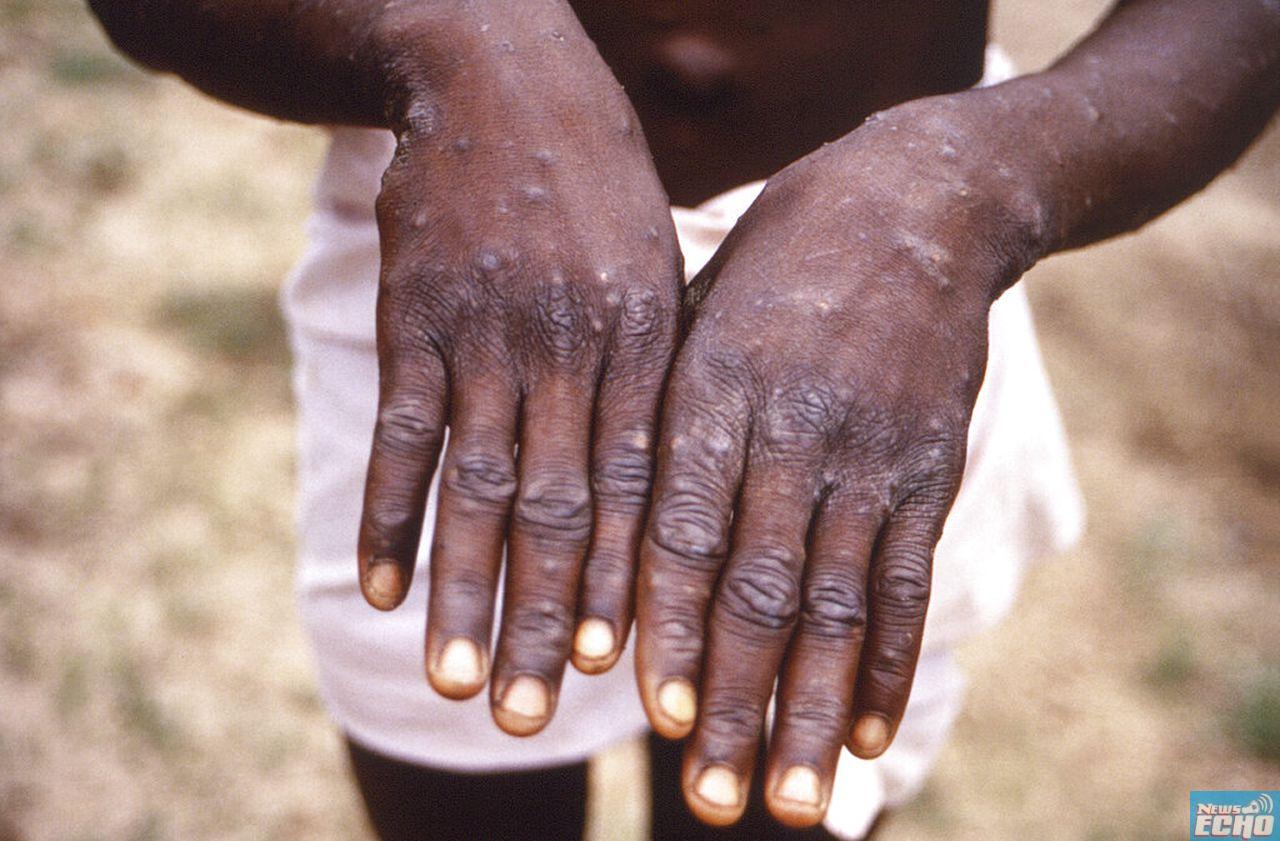
Rashes subsequently appear on the face, the palms of hands and soles of feet, followed by lesions, spots and finally scabs.
Aligning with the WHO in its declaration of Monkeypox as a global health emergency, we are confident that the use of appropriate vaccine will absolutely contain Monkeypox and by speeding up the rollout of vaccinations and treatment will certainly combat the virus’s spread.