

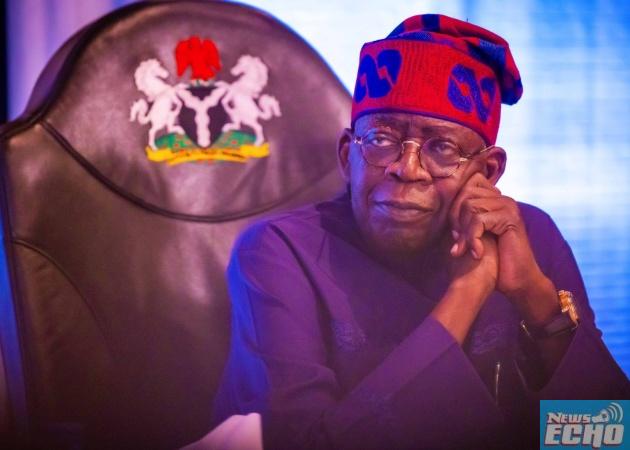

Following the Fifth Amendment to the 1999 Constitution which mandates the President to transmit the names of his ministerial-nominees to the National Assembly within 60 days upon assumption of office, the Nigerian Senate on Thursday announced President Bola Tinubu’s ministerial list.
However, Tinubu transmitted his ministerial list to the National Assembly a day before the expiration of his 60-day constitutional deadline of July 28, 2023.
Tinubu’s first set of nomination was overshadowed by politicians including ex-governors, serving and former members of the Senate and House of Representatives. Twenty-five per cent of the nominees are women while 75% are men.
The list of nominees was presented to the Senate by Femi Gbajabiamila, the Chief of Staff to the President and former Speaker of the House of Representatives.
The presentation took place at 1:19 p.m. and was officially titled ‘Request For Confirmation Of Ministerial Nominees,’ dated July 27, 2023.
Senate President Godswill Akpabio acknowledged the nominations and mentioned that more names would be sent to the Senate for consideration in the near future.
Nigerians are eagerly waiting for the Senate’s confirmation process to see how the new administration’s team will be formed and what roles the nominees will take on in the government.
The list which was read out on Thursday confirmed Uche Nnaji from Enugu; David Umahi from Ebonyi; Nkiruka Onyejeocha from Abia; Stella Okotete from Delta state; Uju Kennedy Ohaneye from Anambra; Nasiru Ahmed El-Rufain from Kaduna and Nyesom WIke from Rivers as nominees for the cabinet.
Though it was not stated what exact positions they’ll hold, the 28 nominees were read out by Senate President, Godswill Akpabio.
Also on the list are Abubakar Momoh, Yusuf Maitama Tukur, Ahmed Dangiwa, Hannatu Musawa, Betta Edu, Dorris Aniche Uzoka, Badaru Abubakar CON, Ekperipe Ekpo, Olubunmi Tunji Ojo, Bello Muhammad Gorony, Lateef Fagbemi, Muhammad Idris, Olawale Edun, Waheed Adebayo Adelabu, Iman Suleiman Ibrahim, Ali Pate, Joseph Utsev, John Enoh and Sani Abubakar Danladi.
The president’s letter read out by Apkabio said “While noting that the above list is not exhaustive, I hope the aforementioned nominees will receive the expeditious consideration and confirmation of the senate.
“Please accept, distinguished senators, the assurances of my highest regards.”
Akpabio said additional nominations would be sent to the Senate in due course. He thereafter read the ministerial list with 28 nominees.
However, there were speculations about the list’s contents, with many political and economic analysts expecting individuals who played vital roles in President Tinubu’s victory in the February 25 presidential election
Meanwhile, Oyetola and Babatunde Fashola, who are close allies of President Bola Tinubu, did not make the list.
Also noticed is that women constitute a quarter of President Bola Tinubu’s ministerial nominees unveiled by the Senate on Thursday. The ministerial list contains 28 names, seven of whom are women.
The women are Hannatu Musawa, Betta Edu, Doris Aniche Uzoka, Nkiru Onyeojiocha, Stella Okotete, Uju Kennedy Ohaneye and Iman Suleiman Ibrahim.
The proportion of women on the ministerial list falls short of the 35 percent Affirmative Action.
The Federal High Court in Abuja had in April 2022 ordered the federal government to enforce the National Gender Policy by allocating 35 percent of appointments in the public sector to women.
Nine civil society organisations had filed the suit against the Nigerian government on August 24, 2020, seeking the implementation of the 35 percent Affirmative Action in appointments of women into public office.