

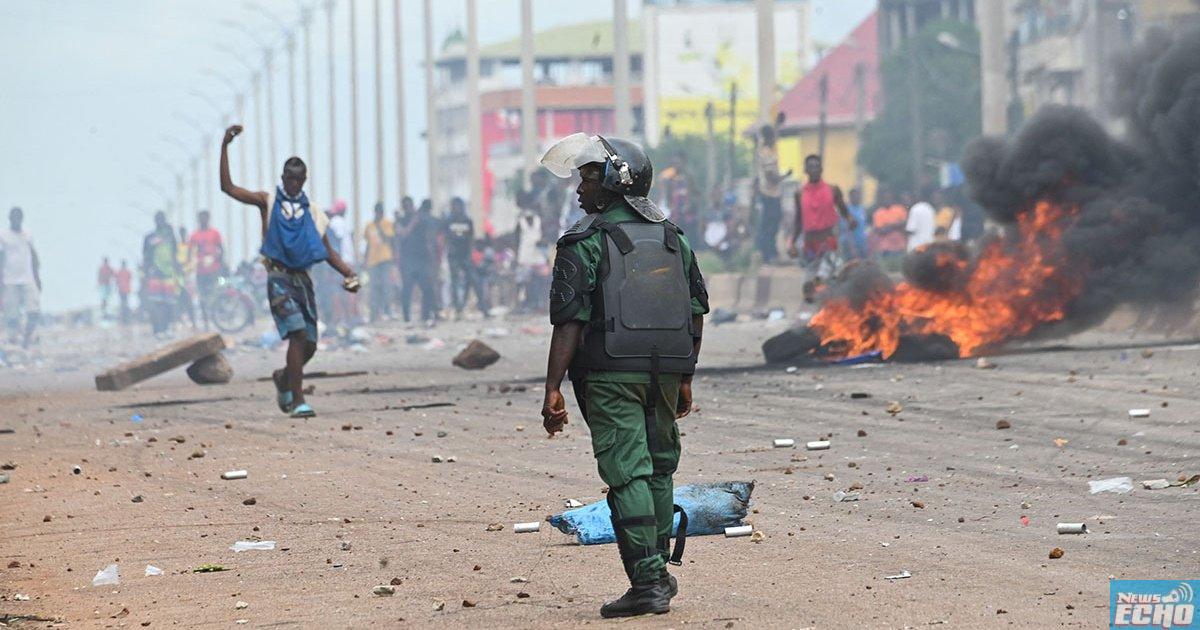

The first rule for preventing deadly conflict is don’t start it certainly not in defiance of either international law or common sense. There are circumstances in which there will simply be no alternative to taking coercive military action, to respond to real and immediate cross-border threats (as in the case of Iraq’s invasion of Kuwait in 1991), and in the case of man-made internal crises of the kind we confronted in the Balkans and Rwanda and elsewhere so often in the last decade to do so in the context of the principle of the ‘responsibility to protect’ (R2P) endorsed by the 2005 UN Summit.
But such action should only ever be undertaken in the most serious cases, as a last resort, and in circumstances where it will do more good than harm. It should certainly not be assumed that R2P requires the use of coercive force, even in the most explosive situations. Kenya at the beginning of 2008 is a case in point, with the violence and ethnic cleansing being stopped not by sending in the Marines but by Kofi Annan’s diplomatic mediation.
The second rule of conflict prevention is to understand the causes: the factors at work; political, economic, cultural, personal in each particular risk situation.
The basic point about conflict is that it is always context specific. Big overarching theories – whether cast in terms of clash of civilizations, ancient ethnic enmity, economic greed, economic grievance, or anything else may be good for keynote speeches and royalties, and may also be quite helpful in identifying particular explanatory factors that should certainly be taken into account in trying to understand the dynamics of particular situations. But they never seem to work very well in sorting between those situations which are combustible and those which are not. For that you need detailed, field-based case by case analysis, not making assumptions on the basis of experience elsewhere, or what has gone before, but looking at what is under your nose, right now.
Again, in conflict prevention is the need to fully understand the conflict prevention toolbox, and be prepared to apply flexibly as circumstances change the whole range of possible measures, that can be deployed to deal with high-risk situations: political and diplomatic measures, legal and constitutional measures, economic and social measures, and security sector and military measures as the case may be.
The crucial thing is to recognise not only that each situation has its own characteristics, and that one-size spanners don’t fit all, but that each situation is likely to require a complex combination of measures, the balance between which is bound to change over time as circumstances evolve. Burma/Myanmar is a good example of a need for a fundamental rethink of the right tools to apply, with the longstanding Western focus on coercive sanctions bearing, in the absence of comparable regional pressure, no obvious fruit in changing the military regime’s inward-looking, undemocratic, authoritarianism.
Although I am an old anti-apartheid campaigner for whom ‘constructive engagement’ has long been an almost obscene expression, I have been persuaded by Crisis Group’s field analysis that re-engagement through major programs of development assistance, and opening up trade, would not only make life less miserable in the short term for Burma’s people, but do more than coercion alone to change over time regime behaviour.
The fourth rule is to be prepared to commit the necessary resources, governmental and intergovernmental, when and where they are needed, and particularly at the early prevention stage, where any investment now is likely to be infinitely cheaper than paying later for military action, humanitarian relief assistance and post-conflict reconstruction — something the international community is still much better at talking about than doing.
When efforts to prevent the outbreak of conflict fails, the task becomes that of preventing its continuation, i.e. conflict resolution — hopefully achieved by peacemaking negotiations rather than the use of overriding military force. In this context, again, there are a number of lessons we have painfully learned about what makes a successful peace accord.
First, peacemaking requires, as does earlier conflict prevention effort, the commitment of serious diplomatic resources, both in quality and quantity, at whatever level is most likely to bring success — through the UN, through a regional organization, through a particular government initiative, or sometimes through second-track or unofficial mechanisms.
Second, successful peace negotiating requires creativity and stamina, and a willingness to work with all the players that matter, however ugly their past behaviour may have been, or stated principles or ideology continue to be.
Again, peacemaking is not an event so much as a process, and signing the agreement is not the end of it. The critical need is to generate commitment to, and ownership of, the peace by the warring parties: so their commitments are not just formal, but internalized, and will stick. That takes, in turn, real skill and commitment on the part of those mediating or otherwise assisting the negotiation.
Fourth, we know that any peace accord must deal with all the fundamentals of the dispute: all the issues which will have to be resolved if normality is to return. One of the most fragile of the peace agreements currently in place is that for Kenya, for precisely this reason: the Annan negotiation, while producing an effective political fix at the top, through a power-sharing agreement which stopped the initial violence, left completely unresolved the fundamental underlying causes of the explosion of ethnic violence, including land distribution, economic disparities and inadequate constitutional and legal protections. We therefore that stake holders should take conflict prevention seriously.