

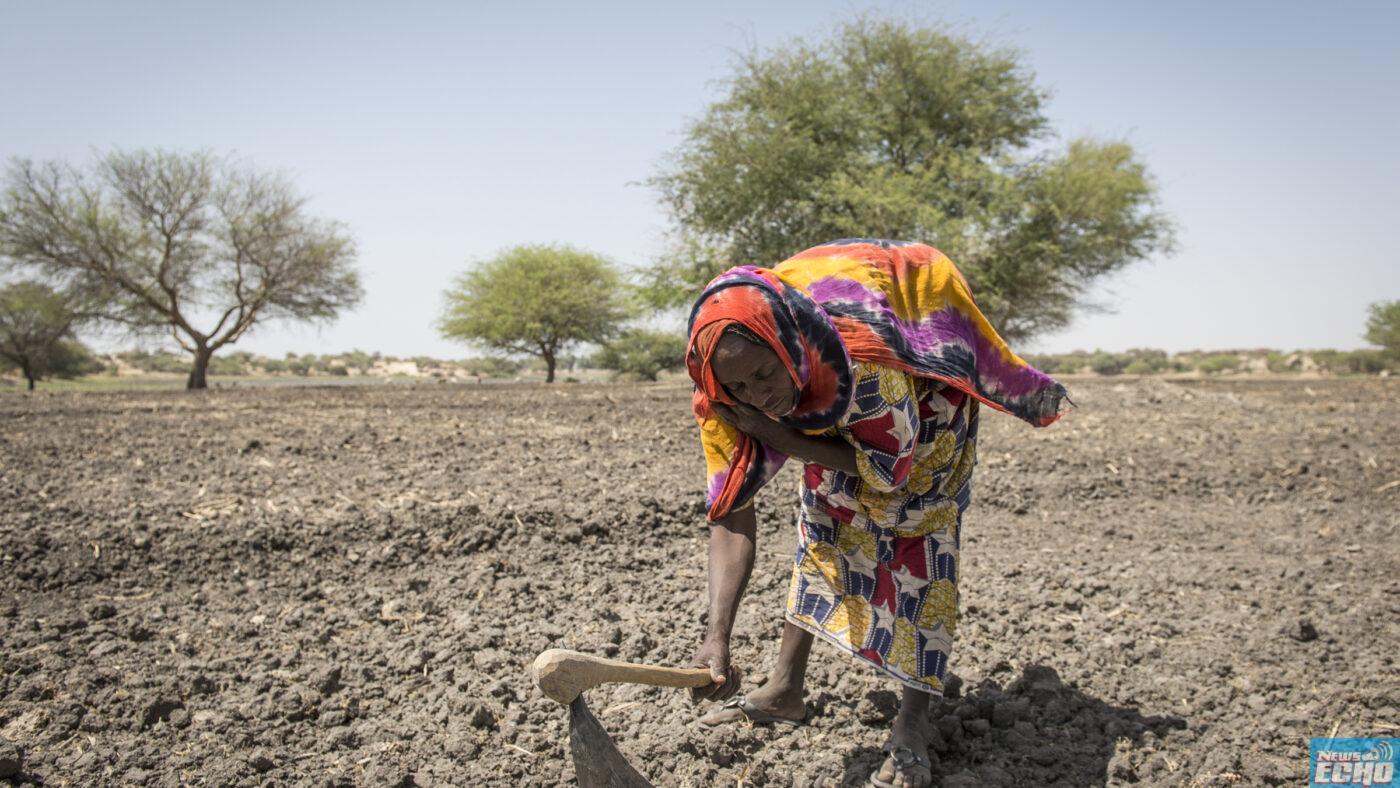

The Director-General of the World Health Organization (WHO), Tedros Ghebreyesus, has expressed concern over imminent food insecurity in the region of eastern Africa (Horn of Africa) due to the climate crisis.
Mr Ghebreyesus said this during an online news conference, saying that the climate crisis is a major factor determining human health outcomes.
He added that climate crisis, which prolonged drought in the greater Horn of Africa, has already driven a wave of hunger, migration and disease, putting a major strain on health services.
He said “This year, nearly 60 million people will face food insecurity across the greater Horn of Africa, which includes Djibouti, Ethiopia, Kenya, Somalia, South Sudan, Sudan and Uganda.
“Over the coming months, we expect a range of extreme weather events, including drought, flood, hurricane, and heat wave, all of which harm human health.
“El Niño, which has now been announced by the World Meteorological Organisation, together with global warming is already driving record temperatures.”
The WHO boss said that on June 3, the world recorded its hottest day ever on record.
The reality of climate change and frequency of its unpleasant consequences constitute significant threats to human lives across different regions of the world. The adverse outcome of climate change has necessitated global concerns and efforts at mitigating its effects as well as advocacy for measures that would restrict human actions that induce climate change.
Climate change refers to changes in the mean variability properties of the climate, which persists over an extended period of time, typically within decades or longer. Climate refers to the atmospheric condition of a particular location over a longer period.
The climatic condition is the long-term summation of the atmospheric elements such as solar radiation, temperature, relative humidity and precipitation and their variations over a long period.
A persistent departure from the mean or/and variability properties of the climate is referred to as climate change. The main cause of the climate change experienced in the present time is the human expansion of greenhouse effect.
Since both Climate change and food insecurity rely heavily on weather patterns like rainfall, Nigeria’s agriculture industry is very susceptible to the effects of climate change. In addition, Nigeria is one of the countries most vulnerable to the effects of climate change and natural hazards.
In like manner, The UN World Food Programme (WFP) says a funding crisis has left no fewer than 5.4 million people stranded without aid in West Africa.
According to the UN food agency, funding constraints have forced the agency to limit emergency aid to only 6.2 million of the most vulnerable people in need across West Africa, scaling back from an initial target of assisting 11.6 million people.
The agency’s emergency food and nutrition assistance operation in the Sahel started in June, focusing on refugees, newly displaced people, malnourished children under five, pregnant women and breastfeeding women.
Food insecurity reached a 10-year high in West and Central Africa, affecting 47.2 million people during the June-August lean season.
Mali and Chad will be hit the hardest, said WFP, with 800,000 people at risk of resorting to desperate measures to cope, including engaging in survival sex, early marriage, or joining armed groups.
“We’re in a tragic situation,’’ Margot Vandervelden, Regional Director ad interim, for Western Africa said in a statement recently.
During this year’s lean season, millions of families will lack sufficient food reserves to sustain them until the next harvests in September and many will receive little to no assistance to tide them through the gruelling months ahead.
“We must take immediate action to prevent a massive slide into catastrophic hunger,” Ms Vandervelden said.
Conflict remains a key driver of hunger in the region, leading to forced population displacements that have emptied out entire villages and limited communities’ access to land for farming.
WFP’s lean season response aims to provide life-saving food and nutrition assistance to families facing acute hunger at a time when food stocks dwindle.
However, proactive investments in prevention and smart longer-term solutions can significantly reduce reliance on such emergency actions.
These solutions include resilience-building activities, social protection programmes and future innovations or investments, such as climate insurance pay-outs.
WFP’s integrated resilience programme in the Sahel focuses on collective watershed planning, land recovery and rehabilitation, and support for smallholder farmers, linking to support such as school meals and other nutrition services.
In Niger, for example, 80 per cent of villages that received WFP resilience support did not require humanitarian assistance in 2022, unlike other villages outside the scheme, in the same areas.
This success meant that about half a million people did not need humanitarian food aid thanks to WFP’s long-term investments in resilience strengthening.
Expanding these activities will be crucial in preventing emergency needs from escalating.
The programme also contributes to strengthening the national capacity to anticipate and respond to climatic and other shocks that are drivers of humanitarian need.
The government has recently made announcements regarding these issues. In May, Bola Tinubu, Nigeria’s president, pledged to implement “best modern practices” to address the conflicts between farmers and herdsmen in the country.
These modern practices include building agricultural hubs to enhance productivity, guaranteeing minimal prices for certain crops and animal products, and creating storage facilities to reduce food waste.
The government should adopt a multi-faceted approach to address the food insecurity crisis. This kind of approach would integrate climate action, modern livestock and farming techniques, and security measures to mitigate the impacts climate change and violent conflict are having on Nigeria’s food insecurity.
News Echo is therefore advocating that in addressing the challenges posed by climate change on food and human security more robust and comprehensive strategies that would address the root causes of vulnerabilities and emerging risks should be the government focus.