

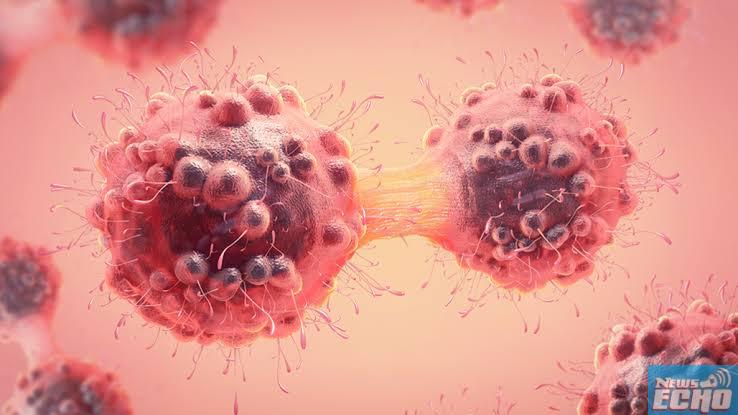

Cancer is a generic term for a large group of diseases that can affect any part of the body. Other terms used are malignant tumours and neoplasms.
One defining feature of cancer is the rapid creation of abnormal cells that grow beyond their usual boundaries, and which can then invade adjoining parts of the body and spread to other organs; the latter process is referred to as metastasis. Widespread metastases are the primary cause of death from cancer.
Cancer is generally described as a disease that occurs when changes happen in a group of normal cells within the body leading to uncontrolled, abnormal growth and forming a lump called a tumour.
Cancer arises from the transformation of normal cells into tumour cells in a multi-stage process that generally progresses from a pre-cancerous lesion to a malignant tumour.
These changes are the result of the interaction between a person’s genetic factors and three categories of external agents, including:- physical carcinogens, such as ultraviolet and ionizing radiation; chemical carcinogens, such as asbestos, components of tobacco smoke, alcohol, aflatoxin (a food contaminant), and arsenic (a drinking water contaminant); and biological carcinogens, such as infections from certain viruses, bacteria, or parasites.
WHO, through its cancer research agency, the International Agency for Research on Cancer (IARC), maintains a classification of cancer-causing agents.
The incidence of cancer rises dramatically with age, most likely due to a build-up of risks for specific cancers that increase with age. The overall risk accumulation is combined with the tendency for cellular repair mechanisms to be less effective as a person grows older.
The factors including tobacco use, alcohol consumption, unhealthy diet, physical inactivity and air pollution are risk factors for cancer and other noncommunicable diseases.
Some chronic infections are risk factors for cancer; this is a particular issue in low- and middle-income countries. Approximately 13% of cancers diagnosed in 2018 globally were attributed to carcinogenic infections, including Helicobacter pylori, human papillomavirus (HPV), hepatitis B virus, hepatitis C virus, and Epstein-Barr virus (2).
Hepatitis B and C viruses and some types of HPV increase the risk for liver and cervical cancer, respectively. Infection with HIV increases the risk of developing cervical cancer six-fold and substantially increases the risk of developing select other cancers such as Kaposi sarcoma.
The World Health Organisation (WHO) estimates that 10 million people die of cancer annually worldwide and that 70 per cent of these deaths occur in low-to-middle-income countries including Nigeria.
Cancer is the second leading cause of death globally, accounting for an estimated 9.6 million deaths, or one in six deaths, in 2018. Lung, prostate, colorectal, stomach and liver cancer are the most common types of cancer in men, while breast, colorectal, lung, cervical and thyroid cancer are the most common among women.
The cancer burden continues to grow globally, exerting tremendous physical, emotional and financial strain on individuals, families, communities and health systems. Many health systems in low- and middle-income countries are least prepared to manage this burden, and large numbers of cancer patients globally do not have access to timely quality diagnosis and treatment.
In countries where health systems are strong, survival rates of many types of cancers are improving thanks to accessible early detection, quality treatment and survivorship care.
Breast cancer, which is characterised by the abnormal growth of cells in the breast, is the most common malignant disorder affecting women and the leading cause of death among them. Although breast cancer can occur in both men and women, it is far more common in women.
Unlike some cancers that have infection-related causes like Human Papilloma Virus (HPV) and cervical cancer, there are no known viral or bacterial infections linked to the development of breast cancer.
Breast cancer is currently the most common type of cancer worldwide, with 2.3 million cases recorded in 2020 and 685,000 deaths globally, according to the WHO.
In 2020 alone, 78,899 cancer-related deaths were recorded in Nigeria, according to Globocan statistics. Women often bear the brunt — breast and cervical cancers are responsible for more deaths than any others in the country.
Based on the GLOBOCAN database, there were about 10,862,496 new cancer cases (excluding skin cancer) in the world in 2002. Of these, 5,801,839 (53.4 percent) were male and 5,060,657 (46.6 percent) were female.
Nearly 45 percent of the new cases were diagnosed in Asia, 26 percent in Europe, 15 percent in North America, 7 percent in Latin America, and 6 percent in Africa. For males and females combined, the most common cancer site worldwide was lung (965,446 male and 386,875 female cases per year).
The second most common site was colon (550,513 males and 472,743 females), followed by stomach (603,003 males and 330,290 females). Among women, the number one cancer site was breast (1,152,161 new cases per year), followed by cervix (493,100 cases), and colon (472,743 cases). Among men, the three most common cancer sites were lung (965,446 cases), prostate (679,060 cases), and stomach (603,003 cases).
According to Oncologist, Cancer is preventable and could be the best approach to combating the deadly ailment as its treatment cost is very high, hence the need for NGOs and other well-meaning individuals to support cancer patients to reduce treatment costs.
We therefore advocate that the task of saving citizens from the cancer scourge remains essentially with government which must provide both the basic facilities to combat the disease and to create the enabling environment that can facilitate the collaboration of the private sector in tackling the menace.
Increased awareness campaigns, improvements in public health and increased funding for health care initiatives by government, donor agencies, and development partners are also good approaches to decrease in the incidence of this killer disease.
Nigerians themselves must also begin to imbibe the culture of regular medical check-ups so they can commence treatment of any diagnosed ailment promptly before it gets too late.