

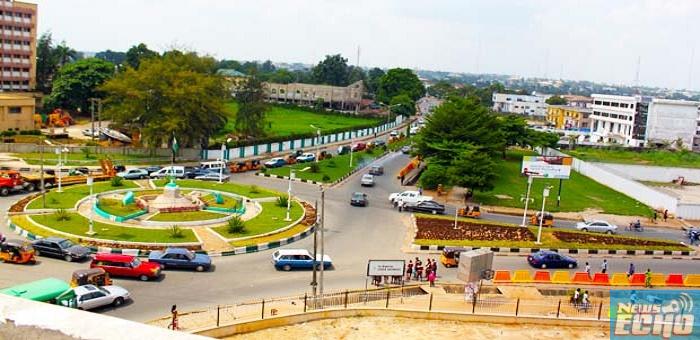

Could it not have been possible that Imo state would have developed at the speed of light if all the infrastructure put in place since 1976 have been sustained by successive governments.
Imo State came into existence on the 3rd of February 1976 along with other new states created under the leadership of the late military ruler of Nigeria, Murtala Muhammed, having been previously part of East-Central State, it has Area: 5,530 km² (2,140 sq mi) with over 3 million with the last census.
Since its creation, 15 leaders have presided over the affairs of the state either as military administrators or civilian governors. Of the fifteen only six were civilian governors while nine were military.
If Imo is a country would it not have its own national grip, gas center that provides electricity for her citizens. It ought to have good roads, working hospitals, standard schools, investment that could attract investors, have functional industries that will provide employment to her teeming youths, have international airports where expatriates will land and do business under the ease of doing business and have increased Gross Domestic Product among others.
Why is it not possible that Imo cannot develop like Abuja, Lagos, Kaduna where the issue of building roads, hospitals, schools and making payment of salary is not an issue. It is to be said that 46 years after, Imo state cannot have industries that will ensure massive production of goods and services, especially solving the issue of unemployment. At 46 years old, Imo state cannot be said to be developing her industrial layouts to optimal functionality so that the state that is centrally located can begin to become the center of production.
Have you imagine that if the development brought in by successive leadership of Imo state have been maintained, where the state would have been. Do she need to go cap in hand begging the federal government to give her monthly allocation before she can develop herself.
Have a look at the past leaders of Imo state and what they have done. Rear Admiral (Retired) Ndubuisi Godwin Kanu was the first Governor after the decree that established the state from part of old East Central State. His achievements during his administration included, bringing in town planners to prepare a plan of Owerri, built roads in Owerri metropolis, expanded the number of local government areas to 21 and founded the Imo Broadcasting Service which went on air in Dec. 1976 and agricultural development corporation (ADC), building of several housing units in Aladimma, launching of Universal Primary schools and construction of rural and urban water scheme, General hospitals and rural electrification.
Dmiral Adekunle Shamusideen Lawal became the Governor of Imo State in 1977 -1978 under the General Murtala Muhammed. His achievements during his administration included, establishment of standard shoe factory, Owerri and Oguta Motel. Every project initiated during his administration were completed and commissioned.
After him came Colonel Sunday Ajibade Adenihu. He was appointed the Military Governor of Imo State in Nigeria from July 1978 to October 1979 during the military regime of Olusegun Obasanjo. In his administration he was able to achieve the following, ensuring the successful completion of the then Federal Government transition to civil rule programme in Imo and handed over to Sam Mbakwe. He established the Imo Newspaper’s Limited which published Sunday Statesman and Nigeria Statesman and College of Technology (now Federal Polytechnic, Nekede).
Shortly after Adenihu, we had Sam Mbakwe who became the Governor of Imo State from October 1979 to 31st Dec.1983. His achievements during his administration was numerous and tangible ranging from, aggressive road infrastructure in Aba, Owerri, Umuahai, Okigwe and Afikpo, created Local Governments, established two gigantic farms in Imo. Imo Modern Poultry Farm, Avutu in Obowo and Ogwe Golden Chicken in Asa, he built and commissioned a Five Star Hotel, Concord Hotel in Owerri, built airport at Owerri now known as Sam Mbakwe Airport, established Aluminum Smelter Plant in Inyishi, built a paint factory at Amaraku though sold by the succeding military Governor, rural electrification of water projects state wide, giving a facelift to Owerri Capital City, establishment of Imo State University (IMSU) at Uturu, Okigwe which was ceded to Abia in 199, established progress bank (now distressed), Imo Television Authority (ITV), cardboard packaging industry at Orlu, Imo Flour mills Limited and Aluminium product at Naze.
Imagine that the incoming leaders kept the tempo of the development, Imo state would have been more developed than Abuja, Lagos among others.
Shortly Mbakwe came Ike Omar Nwachukwu. He held the position of Military Governor of Imo State from 1984-1985. His achievements during his regime were commissioning of the Amaraku power station and launched the Imo State Sports Endowment Fund, he merged the Imo Broadcasting Service and Imo Television to become Imo Broadcasting Corporation, relocation of Imo State University at Uturu which has continued to be its permanent site now Abia State University. The government acquired 10,800 hectares of land for the university’s future needs as a mega University till the next Millennium, he introduced the payment of survival levy by indigene and non-indigenes of Imo as part of efforts to boost the internal revenue generation of the state. Rear Admiral Allison Madueke was born in 1944 in Agbariji-inyi, oji river in Enugu and became the military Governor of Imo State from 1985-1986.
His achievements were, he launched the Nnamdi Azikiwe stadium appeal fund to finish up the building which was abandoned, started the Imo Airport Project through the money realized from Airport Appeal fund. completion of projects embarked upon by their predecessors, commissioned the Grasshoppers international stadium and facilitated the hosting of the 9th African Handball Clubs Championship in Owerri.
Imo state cannot continue to remain down by factors not caused by external issues but by our refusal to begin to work on our natural resources to develop the state.
We shall continue this discourse in our next edition. Watch out for part two.