

By Dr Sam Amadi

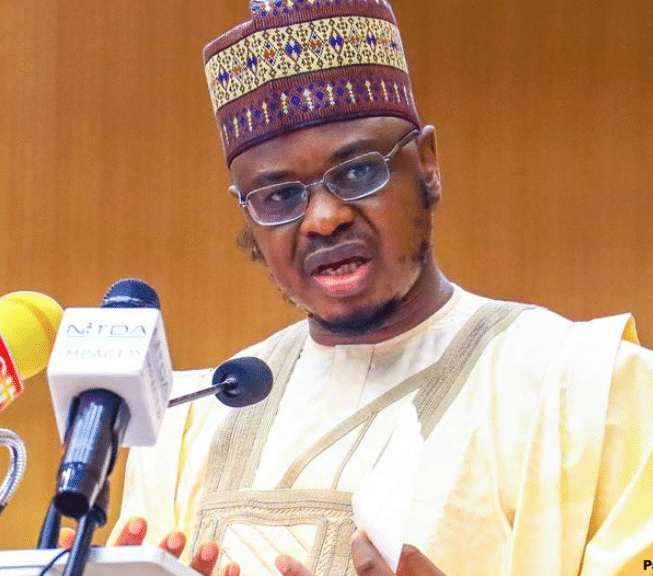
Make no mistake about it. Isa Pantami should resign from his office as Minister of Communication and Digital Economy. He has confessed to his extremist past. All of us can err. And probably he has walked away from those dangerous views. We ought to accept him as a changed man (if he has actually changed, I have my doubts). It is sad that some may have died and many properties lost due to the riots provoked by his terrorist preaching in the past. We accept his repentance and his resignation.
More important than resignation is what the saga tells us about the quality of our state institutions. We are spending so much time thinking about politicians and their incompetence and corruption that we have not bothered if we have a State properly called. Think about it. Assume that Isa Pantami still holds those terrorist views he expressed as late as 2016 or so. This man was nominated for a ministerial position. What report did the DSS issue on him? Did DSS ever vet him? Does the DSS ever seriously vet anyone except those who openly criticize the government or president in power?
The Isa Pantami saga reveals that we may not have an intelligence agency. An intelligence agency is not one that can mobilize violence against activists and street protesters. An intelligence agency is not one that monitors the political opponents of those holding political power at the moment. An intelligence agency is a patriotic agency that monitors and spies on anyone who may pose danger to state security.
An intelligence agency knows that state security is defined as the safety of the Nigerian state and not the wellbeing of the president and his associates. Why did DSS not report the terrible past of the ministerial nominee? If DSS is a real intelligence agency it will be unbiased in its review of every nominee irrespective of his or her ethnic or religious identity. But it is not.
Now think about the fact that the National Assembly screened Isa Pantami before he was confirmed as minister.
So what did the Senate do? How come the matter of this dirty past never got any mention? If it did may be he would have had opportunity to establish that he had walked away from that past. Of course, there is no rigor with confirmatory hearings in Nigeria. It is all a show and a frozen routine.
The procedure is the problem. In 2007 I wrote to the Senate President to reject ministerial list from President Yar’Adua because the list did not have portfolios attached to it. I went to AIT to argue that you cannot have a meaningful confirmatory hearing for ministers if you don’t know the portfolios they are assigned.
Every Nigerian who has attempted secondary education can be a Minister but to be a minister in a particular sector you may need more. For example, the Senators may scrutinize conflict of interest situations that may arise when an energy lawyer who has worked for major oil companies is nominated as Minister of Petroleum. Such conflict of interest situations may not arise if he was listed as Minister of Education.
Of course the leadership of the Senate dismissed me. When Gbenga Aruleba of AIT confronted the then Deputy Senate President with my proposal, his response was typical: who is Sam Amadi to tell us what to do? So the point is that the Pantami saga reveals that Nigeria is not an effective state.
In political science literature an effective is an autonomous state. It is a state that is not beholden to any of its component part. It is a state that has the autonomy to execute strategic national interest, sometimes against the evident sectional or personal interests of ruling elites.
This is why we are still struggling with Boko Haram. We don’t have effective state institutions, especially intelligence agencies.
We don’t have effective state institutions because our state is not autonomous; it is hijacked by special and sectional interests; and it works, not for strategic national interest, but for other sectional and personal interests. So after this crisis we can do some things immediately.
First, we need a law imposing an obligation of marching portfolios to ministerial nominations from the president. Second, we need a new procedure for confirmation in the Senate that allows at least one week before any nominee is confirmed and invite public petitions before final confirmation. Anything to improve rigor and public participation is fine. That will not cure state ineffectiveness. But it will help mitigate it.

