

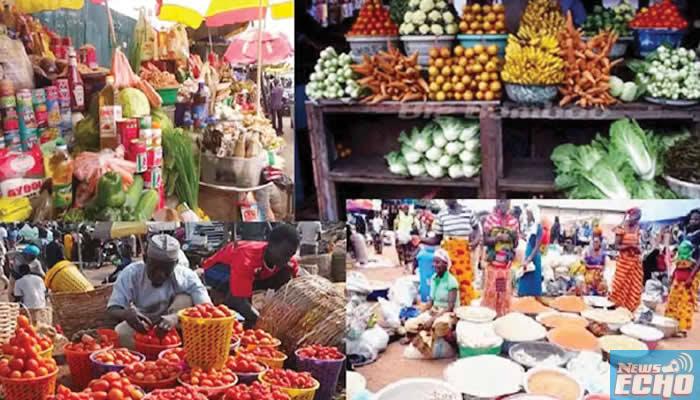

Even though, Nigeria’s inflation has remained at double digits since 2016, with a significant impact on household spending, even as governments across states struggle with backlogs of salaries and pensions.
The nation’s annual inflation rate rose to 22.79 per cent in June from 22.41 per cent in the previous month, according to the National Bureau of Statistics (NBS).
The statistics office said the June 2023 inflation rate showed an increase of 0.38 per cent points when compared to May 2023 headline inflation rate.
The NBS said on year-on-year basis, the headline inflation rate was 4.19 per cent points higher than in June 2022, which was 18.60 per cent.
The NBS noted that food inflation rate quickened to 25.25 per cent in June from 24.82 per cent in May.
The bureau said the rise in food inflation was caused by increases in prices of oil and fat, bread and cereals, fish, potatoes, yam and other tubers, fruits, meat, vegetable, Milk, cheese, and eggs.
“On a month-on-month basis, the Food inflation rate in June 2023 was 2.40 per cent. This was 0.21 per cent points higher compared to the rate recorded in May 2023 (2.19 per cent).
“The average annual rate of Food inflation for the twelve months ending June 2023 over the previous twelve-month average was 24.03 per cent. This was a 5.41 per cent points to increase from the average annual rate of change recorded in June 2022 (18.62 per cent),” it said.
The report added that the core inflation, which excludes the prices of volatile agricultural produce, stood at 20.27 per cent in June 2023 on a year-on-year basis, up by 4.53 per cent compared to the 15.75 per cent recorded in June 2022.
It said the highest increases were recorded in prices of passenger transport by air, gas, vehicle spare parts, liquid fuel, fuels and lubricants for personal transport equipment, medical services, passenger transport by road etc.
Similarly, in its latest jollof index report, SB Morgen, a geopolitical intelligence platform, disclosed that the cost of preparing a pot of jollof rice, a popular delicacy among Nigerians has risen with about 9.73 per cent increase.
SB Morgen’s report said Nigeria is facing a persistent food crisis that is continually aggravated by insecurity, poor policies, adverse weather conditions, and international events such as the ongoing Russia-Ukraine war.
It said the food crisis stems from various factors, including instability in food-producing regions, inadequate storage infrastructure, and a lack of agricultural commercialisation.
More so, the increase in the prices of food and other essential items continues to bite harder, the removal of petrol subsidy and other policy interventions from the Nigerian government have worsened the situation.
Recall that President Bola Tinubu had, in his inaugural address on 29 May, announced the removal of petrol subsidy.
The sudden announcement triggered an immediate nationwide rise in the pump price of petrol.
The petrol hike subsequently prompted a continuous and steady increase in transportation fares and prices of goods and services, including foodstuff, at various percentages.
Apart from the removal of subsidy, the Central Bank of Nigeria (CBN) also announced the unification of all segments of the forex exchange (FX) market as part of efforts to engender transparency in the markets and boost investors’ confidence. Although the policy has been widely applauded as well-intentioned and necessary, it has put additional pressure on the local currency and manufacturers, with ripple effects on prices.
Both policies are being put in place at a time Nigerians are just recovering from the shocks of a controversial naira redesign policy that crippled businesses and made life difficult for many Nigerians who could not access their funds for several months.
Regrettably too, both policies of fuel subsidy removal and unification of exchange rate are being put in place at a time Nigerians are just recovering from the shocks of a controversial naira redesign policy that crippled businesses.
Inflation has remained high in Africa’s largest economy, prompting the apex bank to hike interest rates to their highest levels in nearly two decades.
In an aggressive push to contain the nation’s inflationary pressure, the Central Bank of Nigeria, in May, raised its benchmark lending rate to 18.5 per cent.
On 13th July, President Tinubu declared a State of Emergency on food insecurity to tackle the increase in food prices.
He also directed that “all matters pertaining to food & water availability and affordability, as essential livelihood items, be included within the purview of the National Security Council.”
But as the government policies begin to impact socio-economic realities, food prices continue to soar high.
The national president of the All Farmers Association of Nigeria (AFAN), Ibrahim Kabiru, has identified many reasons responsible for the continued rising of food prices, these according to him include the flooding that swept through farming communities in the country last year also caused a shortfall in production and that gave rise to scarcity and high prices.
“Secondly, the exchange rate that was going up before the currency was redesigned was also responsible for some inflation. Then the currency redesign itself is also a factor, maintaining the cost of production and transportation are also major factors affecting the prices of food.
“Transport is quite high because of the high price of Petrol and the cost of production also is another factor because fertilizers are higher and other farm inputs are also costly.”
He called on the government to address issues of insecurity, which impacts production in the country, farm inputs and other challenges in order to address food insecurity and sustainability.
We therefore urge the federal government of Nigeria and even the State government to proactively and urgently work out sincere palliative measures to mitigate the horrible impact of petroleum subsidy removal and similar shocks on the people as many Nigerians are still reeling from the devastating impact as prices of petrol, foodstuff and other essential commodities continue to rise.

