

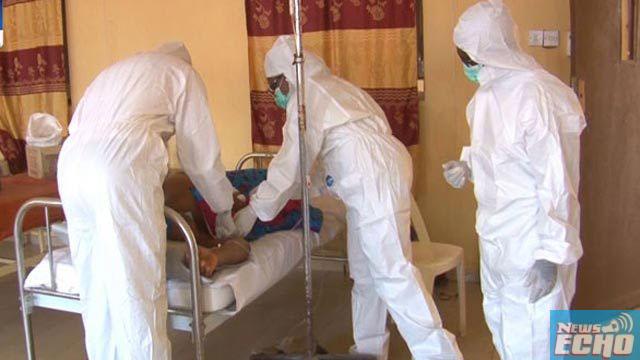
The Nigeria Centre for Disease and Control and Prevention (NCDC) says in less than three months, the country has registered 784 confirmed cases of Lassa fever with 142 deaths across 23 states.

The NCDC via its official website said on Tuesday that the infections were recorded from 1 January till date.
Lassa fever is an acute viral haemorrhagic fever caused by the Lassa virus. The natural reservoir for the virus is the Mastomys natalensis rodent (commonly known as the multimammate rat or the African rat).
Other rodents can also be carriers of the virus which spreads through direct contact with the urine, faeces, saliva or blood of infected rats.
The virus can also spread through contact with objects, household items and surfaces contaminated with urine, faeces, saliva or blood of infected rats.
It said that in Epidemiological Week 11, the number of new confirmed cases decreased from 70 in Week 10 of 2023, to 38 cases.
The agency said that the cases were reported from Edo, Ondo, Ebonyi, Bauchi, Taraba, Benue, Rivers, Plateau, and Nasarawa States.
NCDC said that cumulatively from Epidemiological Week 1 to Week 11, 2023, 142 deaths had been reported with a Case Fatality Rate (CFR) of 18.1 per cent which was lower than the 18.7 per cent CFR for the same period in 2022.
The NCDC said that, in total for 2023, 23 states had recorded at least one confirmed case across 97 local government areas.
The public health institution said that 71 per cent of all new confirmed Lassa fever cases were reported from Ondo, Edo and Bauchi while 29 per cent came from six states.
It said that of the 71 per cent, Ondo reported 32 per cent, Edo, 29 and Bauchi, 10.
According to the NCDC, the predominant age group affected is 21-30 years with the median age as 32 years.
It said that the male-to-female ratio for confirmed cases was 1:0.9.
The agency said that the number of suspected cases increased compared to the number reported for the same period in 2022.
The NCDC said that a healthcare worker was affected in Week 11.
It said that the National Lassa fever multi-partner, multi-sectoral Emergency Operations Centre was activated to coordinate response activities at all levels.
It is reported that the person-to-person transmission of Lassa fever can occur through contact with blood, urine, faeces, vomitus and other body fluids of an infected person.
Lassa fever initially presents like other commonplace illnesses accompanied by fever, such as malaria.
Other symptoms include headache, general body weakness, cough, nausea, vomiting, diarrhea, muscle pains, chest pain and sore throat.
In severe cases, the symptoms include bleeding from ears, eyes, nose, mouth and other body openings.
The time between infection and the appearance of symptoms of the disease is three to 21 days.
Early diagnosis and treatment of the diseases greatly increase the chances of a patient’s survival.
Also, the Nigeria Centre for Disease Control (NCDC) has announced that Nigeria recorded five new COVID-19 infections from 25 February to 31 March.
According to the centre, the new cases were reported from Lagos and Rivers states.
According to the latest NCDC situation report which was released on Saturday, Rivers State recorded four cases while Lagos recorded a single case.
The latest figure has raised the total number of confirmed COVID-19 infections in Nigeria to 266,665.
NCDC stated that as of Saturday, 259,951 cases have been discharged and 3,155 deaths have been recorded in 36 states and the Federal Capital Territory.
It noted that four states: Abia, Kaduna, Kano, and Nasarawa reported no cases, adding that a multi-sectoral national emergency operations centre (EOC) will continue to coordinate the national response activities.
Furthermore, since the outbreak of Diphtheria in January 2023, the Nigeria Centre for Disease Control (NCDC) has continued to record new infections and fatalities in the country.
NCDC in its latest situation report from weeks six to eight shows that a total of 377 suspected cases were reported from seven states across the country.
Of the 377 suspected cases reported, NCDC noted that 102 were confirmed, 113 (30 per cent) were discarded; 148 (39.3 per cent) are pending classification and 14 (3.7 per cent) were unknown.
The disease control centre added that six deaths with a case fatality ratio (CFR) of 5.8 per cent were recorded from the confirmed cases during the weeks under review.
Kano State, North-west Nigeria, has maintained the lead on the Diphtheria infection chart since the NCDC announced the outbreak in January.
The disease centre had confirmed in a public health advisory issued in the wake of the outbreak that not less than 25 people have reportedly died from the disease in Kano State.
The State Government subsequently confirmed the infection outbreak in 13 local government areas of the state, with 100 suspected cases and three deaths recorded as of 20 January.
In the latest situation report, Kano State recorded 96.8 per cent (355) of the 377 suspected cases reported from weeks 6 to 9 of 2023.
According to NCDC, Nigeria has recorded a total of 389 confirmed Diphtheria infections and 62 deaths across 24 local government areas in six states from week 19 of 2022 to week 9 of 2023.
NCDC noted that only 60 (15.4 per cent) of 389 cases were fully vaccinated with a diphtheria toxin-containing vaccine.
It added that the majority of 78.4 per cent of the confirmed cases occurred among children aged two to 14 years.
NCDC also noted that a total of 1,064 suspected cases were reported from 21 states. Six states: Kano (843), Yobe (86), Katsina (46), Lagos (22), Sokoto (14) and Zamfara (13) accounted for 96.2 per cent of these suspected cases.
Of the 1,064 suspected cases reported, 389 (36.6 per cent) were confirmed, 322 (30.3 per cent) were discarded, 201 (18.9 per cent) are pending classification, and 152 (14.3 per cent) are unknown, the disease centre noted.
We therefore advocate that that the Federal and State Governments needs to strengthen both the preventive and curative strategies to enable healthier living for Nigerians.

