

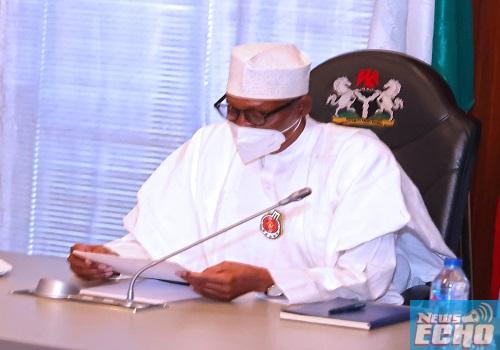
When a few days ago he affirmed before the international community that he will ensure free, fair and credible elections come 2023, perhaps it escaped President Buhari, whose supporters tout as ‘Mr. Integrity,’ that the Electoral Act Amendment Bill waiting for his assent posed a potential integrity test for him and his government of ‘change.’

That after his ‘consultations,’ the president, for the fifth time, declined assent to the bill speaks to the fact that Buhari may have other legacies, good or ill, to bequeath Nigeria but perhaps certainly not a robust electoral system better than what he inherited. This is not the first time the president is declining his assent to the bill, he did a similar thing in 2018 citing ‘nearness’ of the general elections.
The last holistic amendment of the Electoral Act in Nigeria was in 2010, under President Yar’Adua of blessed memory, which amended the 2006 Electoral Act, the first ever in our Fourth Republic. Having called the election that produced him ‘flawed,’ President Yar’Adua further asserted at the 33rd Summit of G8 Nations in Germany that the greatest challenge facing the Nigerian polity as it were was the electoral system. Back home, the next thing the late president did towards fixing the electoral process was to inaugurate the Justice Uwais Committee, the report of which came up with the best ever amendment there is to our electoral laws, but was sadly killed by the then National Assembly members.
President Buhari, rather than use the framework of the Uwais report or adopt the recommendations therein to carry out wide electoral reforms, hastily set up the Ken Nnamani Committee in 2016, another electoral jamboree which ended in ruse. Today, the president has flatly declined assent to the amendment bill having only partially considered items like the so-called ‘Not Too Young to Run Bill,’ limitation of tenure of office of a deputy governor or vice president who succeeds a deceased governor or president to a single term limit and other sundry items, all largely pre-election maters.
The recent rejection of the bill this time was hinged on the issue of direct party primary election as inserted therein. According to the president, direct party primary elections could: be more expensive than the indirect, as not all parties ‘could muster the finance to fund’ such exercise; overstretch the security architecture of the state; infringe on the rights of Nigerians; alienate smaller political parties; be easily manipulated by incumbent office holders seeking reelection and so on.
What the president appears to be telling 200 million Nigerians, his employers, was that other vital provisions of the bill like electronic transmission of results remain discardable items because of one clause – mode of party primary election! – even when the president, who himself is a product of direct party primary election, could have done better!
While it is right to consider the positions and excuses advanced by the president, there are also far-reaching benefits of direct party primary election of which the president, his team of advisers and ministers are not oblivious. The Nigerian kind of democracy is not the grassroots-based or pro-people type, it is entirely elitist; and this is what systems like indirect primary election have sustained for yonks.
For example, while direct party primary may be costlier than indirect (on the part of the party), the former broadens and encourages participatory democracy and by extension internal democracy as all card-carrying members of the parties will have a say with their votes. Presently, not all card-carrying members of political parties get to take part in the selection of candidates at intra-party level.
It has always been the preserve of a few – like governors, political has-beens and other bigwigs – within the party to draw the delegates list and this has stymied popular consent with monetary inducement and gratification enthroned as a piece of political culture since the few delegates, as against all party members, could be bought over.
We all recall how during the last PDP presidential primary election party fat cats and moneybags threw a confetti of hard currencies at delegates! What is more, saying that direct party primary election system infringes on the rights of Nigerians is stating the exact opposite of the fact as greater number of Nigerians would own the process and exercise their rights if elections at party level were to be direct. It goes without saying that the president was quite wide of the mark in his supposition!
While it may be hard for political parties to muster finance to manage direct primary election at all levels, there is no law, written or unwritten, that requires parties in Nigeria to have national spread or to field candidates at all levels of election before they could exist or operate.
In fact, Nigeria’s is a multiparty system which allows mushrooming of many political parties that may decide on a coalition (as happens often, even with the 2013 APC merger), to adopt another party’s candidate or to concentrate their campaign and activities just within a state or geopolitical zone like APGA. What, one may ask, is the spread and finance of a party like the YPP which fielded a candidate for presidential election during the last general elections? Outside PDP and APC which other political parties have such deep pockets that they currently run and maintain offices at all the wards and councils across the federation? Though finance plays a great role in the electoral process, it has never been only about finance for political parties here.
Again, the system of alienating party faithful at ward, council, state and national levels has rendered ineffectual the base of our democracy, leaving same wobbly like the proverbial ‘inverted pyramid’ standing on its tip or point instead of its base. Truth is, using the pyramidal illustration, the base of every democracy is its foot, which forms the grassroots on which such system stands, but ours, as elitist as it is, remains the direct opposite of this. This has further narrowed the leadership selection process and lowered the quality of candidates so elected as against direct primary which tends to give credibility to popular candidates and power to the people rather than to the governors or a few party higher-ups.
The fear entertained by the president that direct primary election could overstretch the security architecture of the state though logical is nothing new and may not stand because such primary election, which at most remains an isolated affair of the political party so involved, is not going to be as cumbersome and complex as the quadrennials held general elections where all the political parties – sometimes numbering over 50 – are involved in same elections happening on the same date across all wards, councils and states within the federation under the watch of same security agencies.
The point here is that this whole conversation should push us to True Federalism where each state or subnational government manages and funds its own election how it sees and deems fit, independent of the federal government and its umpire, as is done in the US and other democracies.
While it is not entirely wrong to say that direct party primary election could result in meddling in the internal workings and affairs of political parties, the truth remains that in Nigeria consensus building, broad participation and internal democracy at the level of political parties, whether PDP, APC or what have you, have remained a hoax. For example, PDP has a constitution that allows for what it calls a ‘consensus candidate’ with automatic ticket and waiver given to new or returning members most times, but the candidates that had so far emerged from that process had hardly come from any consensual arrangement agreed upon by an overwhelming majority within the party, rather it has always been about few persons, either ‘stakeholders’ or ‘National Working Committee’ or ‘Board of Trustees’ deciding who gets what, how and when. Parties in Nigeria, especially those who wear and bear the tag of ‘progressives’ or ‘peoples’ need to begin a political realignment programe that accommodates all members than just a cliquish few.
We all remember that even the APC whose constitution – unlike the main opposition, the PDP – did not say much about consensus candidacy, presented President Buhari with automatic ticket as its ‘sole candidate’ during what the party called ‘parallel’ presidential primary election prior to 2019 general elections. In fact, APC had adopted the direct mode of primary election – same Buhari now rejects – as its system of leadership selection with Buhari, who was in far away America attending the 73rd Session of the United Nations General Assembly (UNGA), recording a landslide victory polling over 98% of the total votes cast.
Kano State alone, from the same exercise, had given the president some 2.9 million votes while his home state of Katsina returned over 800,000 votes. Why then is Buhari today telling Nigerians that direct party primary election – same which produced him, by the way – is unacceptable to be part of our laws? Is that not hypocrisy?
Buhari is not alone. With him are majority of the governors, the chief beneficiaries of the status quo ante, who are always interested in succeeding themselves with their puppets or head to the Senate where they retire, for the most part. Governors, at state level, it should be known, always want to control all party powers, structures and machineries which the president and his party may leverage to their advantage during electioneering. This explains why a governor like Samuel Ortom of Benue State, the most vocal of Buhari’s critics within our governorship consortium, defended Buhari’s rejection of the bill. It was rumoured heretofore in different quarters, including the grapevine, that the governors were working to ensure that the provision of direct party primary was expunged or the bill rejected outright since they (the governors) are always at loggerhead with National Assembly members and federal ministers at the state front over party control or choice of candidates. This is not far from the truth.
The ball now is in the court of the National Assembly to either override the president or chicken out. Section 58(5) of the 1999 constitution as amended gives the National Assembly powers to override the president when the latter withholds his assent to any bill or instrument the National Assembly transmits to him/her with two-thirds majority votes at both chambers and legislative concurrence. But how far the National Assembly can really go is an entirely different ball game as this is the fifth time the president is rejecting the same bill after series of inputs had been made by the National Assembly. This bill may yet go the way of previous amendments before it because there is a sense in which a greater majority of Nigerians see as a rubber stamp chamber the current Ninth Assembly under Gbajabiamila and Lawan; something entirely different from Saraki and Dogara-led eighth Assembly. The fact that the ultimate object of the Ninth Assembly is to achieve a ‘healthy relationship’ with the executive, as once theorised by Senate President Ahmed Lawan, may well get in the way of the passage of the bill since the National Assembly may not be willing to sacrifice such friendship for a matter like electoral amendment.
The fact that Nigerians have only witnessed only one holistic amendment to her 2006 first ever electoral laws in 2010 means that Nigerians are being shortchanged and have not therefore had as part of its electoral laws many of the healthy conversations so far held on improving the electoral system with three Assemblies (the seventh, eighth and ninth Assembly) after four electoral cycles of 2011, 2015 and 2019.
If there is one president who Nigerians believed should give them a credible electoral reform, it is without doubts Buhari, who condemned the system as opposition after three unsuccessful or abortive tries from 2003 to 2011. Evolving a better electoral system requires constant amendments that follow every electoral cycle. Nigeria is not interrogating her systems and the flaws therein even as amendments to electoral laws keep heating up the polity in a back and forth dispute and delay after 2010 general amendment.
However, the only thing cheering about it all is the fact that while the National Assembly was still stuck in the politics of a letter of rejection from the presidency, INEC Chairman Prof. Mahmoud Yakubu in a meeting with state Residential Electoral Commissioners (RECs) hinted at the Commission’s resolve to go on with electronic transmission of results and INEC result viewing (IReV) portal in spite of the politics of the day. Since its establishing laws and electoral laws empower INEC to manage and conduct elections as an ‘independent’ umpire, the Commission may not be needing any input from anyone to achieve its mandate of ensuring smooth and credible elections. Howbeit, INEC is a creation of the law and does need a regulatory legal framework to work, how it achieves all this outside a legal provision remains to be seen. This perhaps could be the Commission’s token to the Nigerian electorate. For now, Buhari, by declining his assent to the bill has given the nation his best, a Christmas present which may be a fait accompli because Buhari has the kind of National Assembly he had so long desire.

